
The quick answer
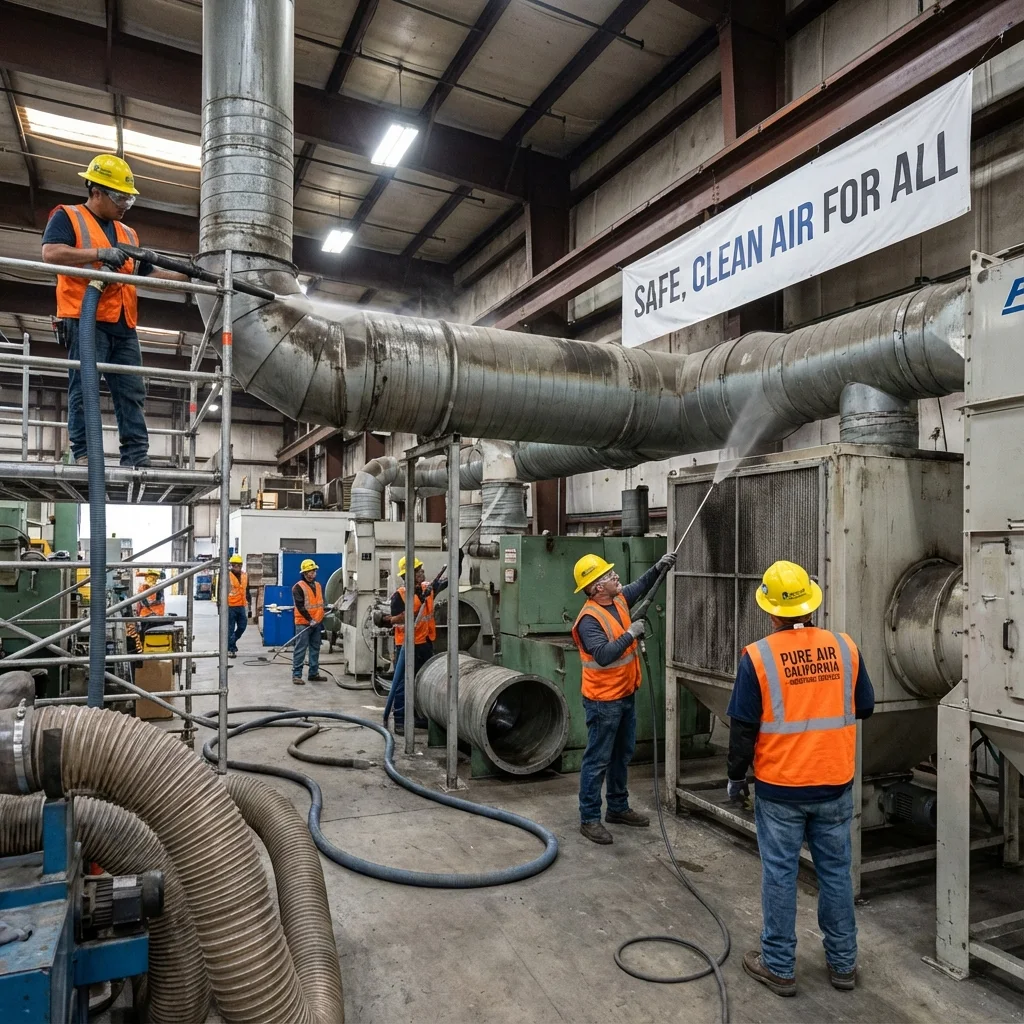
Industrial ventilation work starts with understanding what the system handles. Comfort HVAC, process exhaust and dust collection should not be treated as interchangeable cleaning jobs.
Identify the system and the material
Provide the equipment list, system drawings if available and the materials involved in the process. OSHA’s combustible-dust guidance explains why the nature of dust matters to hazard assessment. Bring your facility safety team into the planning before selecting tools or a cleaning method. OSHA: combustible dust guidance.
Agree on access and shutdown responsibilities
Name who authorizes shutdowns, controls equipment access and approves restart. Discuss elevated work, production boundaries, sensitive machinery and any site-specific contractor requirements. A general cleaning estimate is not a substitute for your facility’s hazard assessment or operating procedures.
Write down the exclusions
If the requested work includes process residue, hazardous material or specialized equipment, establish what the contractor is qualified and equipped to handle. Identify areas that cannot be accessed and how these will be reported. Avoid assuming that an ordinary air-duct service covers a process exhaust network.
Plan the project handover
Ask for an equipment-based record of the agreed work and remaining items. Discuss any required inspections, measurements or sign-offs with the responsible facility professionals before booking.
- System purpose and process materials
- Access and shutdown contacts
- Defined cleaning boundaries
- Waste and site-handling requirements
- Restart and documentation responsibilities
Plan your next step
Explore the related PAC service or guide, or call (213) 792-4145 to discuss the property, equipment and access.
Further reading
Ready to Take Action?
Coordinate a site-specific industrial cleaning scope.