
Air Duct Sanitizing in Los Angeles
Start with the condition of your system.
About this service
We can discuss cleaning and whether a proposed chemical treatment belongs in the scope, with the product and its limitations explained before you decide.


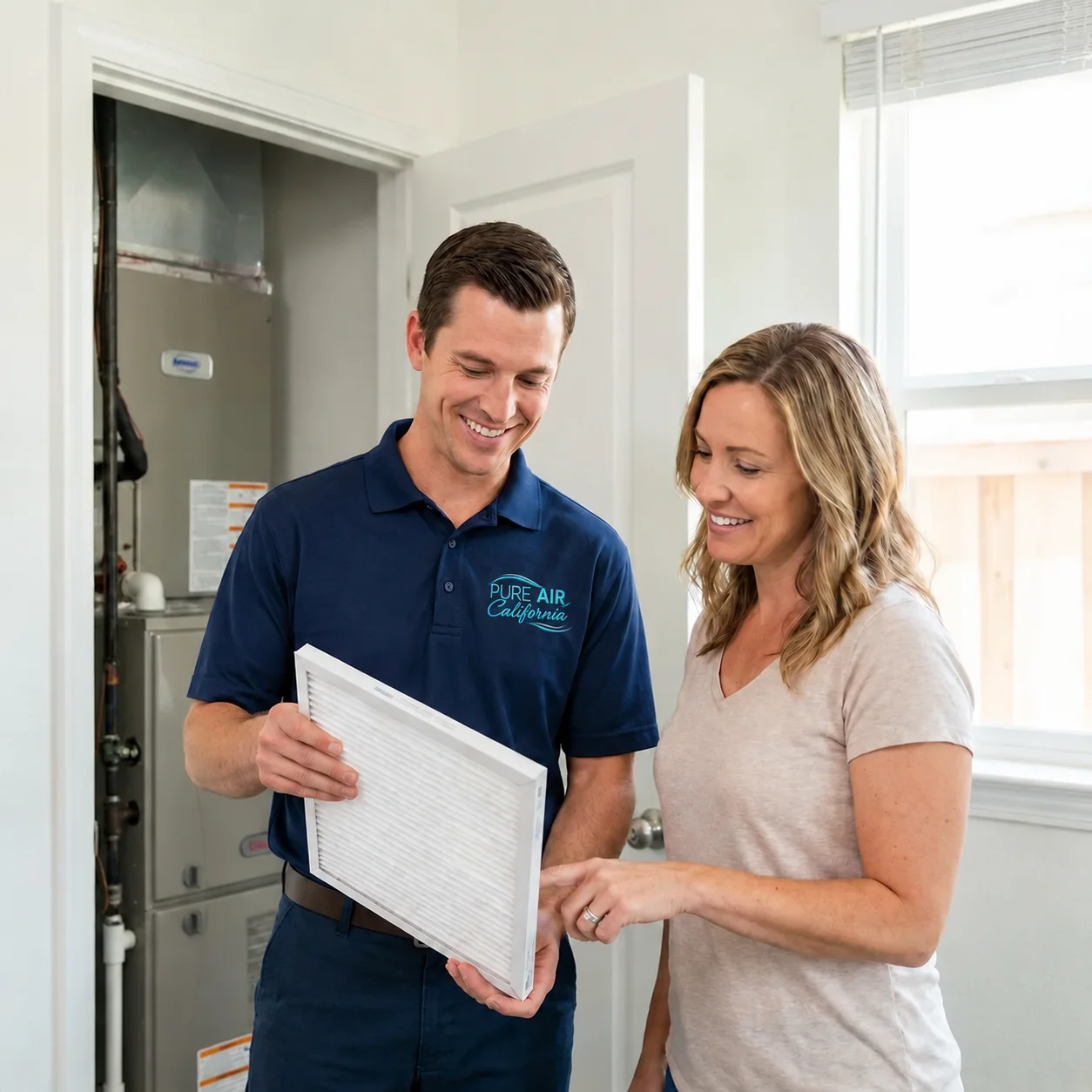
Clear advice before any treatment.
See the plan.
Know what comes next.
Three simple steps. A scope shaped around your property.
 01
01Look inside
Your system. Its condition. The reason for the visit.
 02
02Agree the plan
The work, the access and the price. Clear before we start.
- 03
Care for your system
Complete the agreed work. Walk through what comes next.
A quick overview, with the details when you need them.
01A treatment needs a specific reason
Sanitizing is not an automatic addition to a duct cleaning visit.
A treatment needs a specific reason
Sanitizing is not an automatic addition to a duct cleaning visit.
The EPA says the benefits and possible adverse effects of applying chemical biocides inside ducts have not been established. An odor, a recent move or an allergy concern alone does not establish that a chemical treatment is appropriate.
- Describe the concern and any moisture history when requesting an assessment.
- Ask what was found, where it was found and which material is affected.
- Ask about cleaning, repair or replacement options before authorizing an application.
02Check the material and the label
A product registration does not authorize every HVAC use.
Check the material and the label
A product registration does not authorize every HVAC use.
The proposed use must match the product label, the duct material and the application conditions. EPA guidance states that no chemical biocides are registered for internally insulated air ducts. Wet or moldy insulation may need replacement.
- Request the product name, registration number and label.
- Confirm surfaces, application method and any ventilation or re-entry requirements.
- Get the agreed treatment areas and exclusions in writing.
03Investigate moisture and suspected mold
Cleaning or a chemical application cannot repair a moisture source.
Investigate moisture and suspected mold
Cleaning or a chemical application cannot repair a moisture source.
What looks like mold may require qualified assessment to identify. Resolve the underlying moisture problem and decide whether affected materials can be cleaned or need replacement.
04Agree the scope before work begins
Tell us about the system, access restrictions and the concern you want investigated.
Agree the scope before work begins
Tell us about the system, access restrictions and the concern you want investigated.
Ask the team to explain the findings, what is included in the estimate and what requires a different specialist. If a chemical treatment is proposed, request its documentation and discuss occupancy arrangements before approving it.
Frequently Asked Questions
Is sanitizing necessary for every duct cleaning?
No. It should not be included automatically. Ask for a specific reason, the product label, material compatibility and alternatives before deciding.
Can you guarantee that a treatment is safe for children or pets?
We cannot make a blanket safety guarantee. Precautions depend on the product and application. Review the label and occupancy requirements, and consult a healthcare professional about individual sensitivities.
Will sanitizing treat allergies or asthma?
Duct sanitizing is not medical treatment. We do not promise symptom relief or disease prevention. Discuss health concerns with a qualified healthcare professional.
Will it permanently remove an odor?
No permanent result is promised. Odors can come from several parts of a building. Identifying the source is the first step; a treatment in the ductwork may not address it.
How is a sanitizing assessment priced?
The estimate depends on the system, access and proposed scope. Request a written breakdown of inspection, cleaning and any separately proposed treatment before authorizing work. Call (213) 792-4145 to discuss your property.
Related services
Get a free estimate
No obligation, and the price is confirmed before any work starts. Serving Los Angeles County and parts of Ventura County.
Useful answers.
A clearer next step.
Find your service area.
Homes and businesses across Greater Los Angeles. Confirm the address and access when requesting your estimate.
- Los Angeles service guide →
- Brentwood service guide →
- Culver City service guide →
- Century City service guide →

Imagine two minutes
without a breath.
Now notice the one you are taking.
Relax your shoulders. Follow the gentle rhythm, or breathe naturally at your own comfortable pace.
A home holds our everyday lives. Its air deserves a little love, too.
Why we care about every breathLet your shoulders soften.
0 / 60 seconds · breathe in